History
A place with tradition
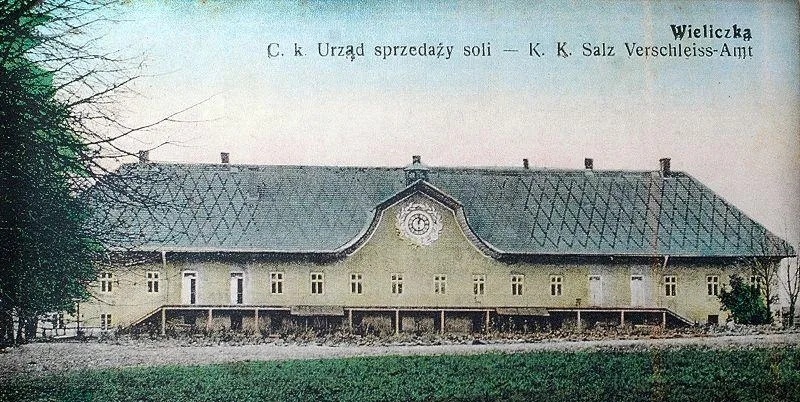
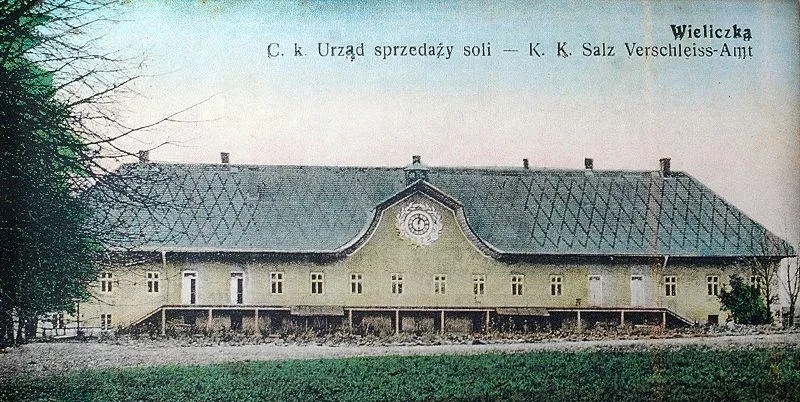
Turówka Hotel & SPA**** is a building with over 200 years of history, whose origins date back to the times when a salt boiling plant approved by Emperor Francis I was planned on the premises of Wieliczka. Built at the beginning of the 19th century, the building quickly began to change its purpose, reflecting the turbulent fate of the region.
Over the following decades, it served various functions – from industrial backrooms, through warehouses, to residential spaces. Each stage left its mark here, creating a unique character of a place that combines history with everyday life.
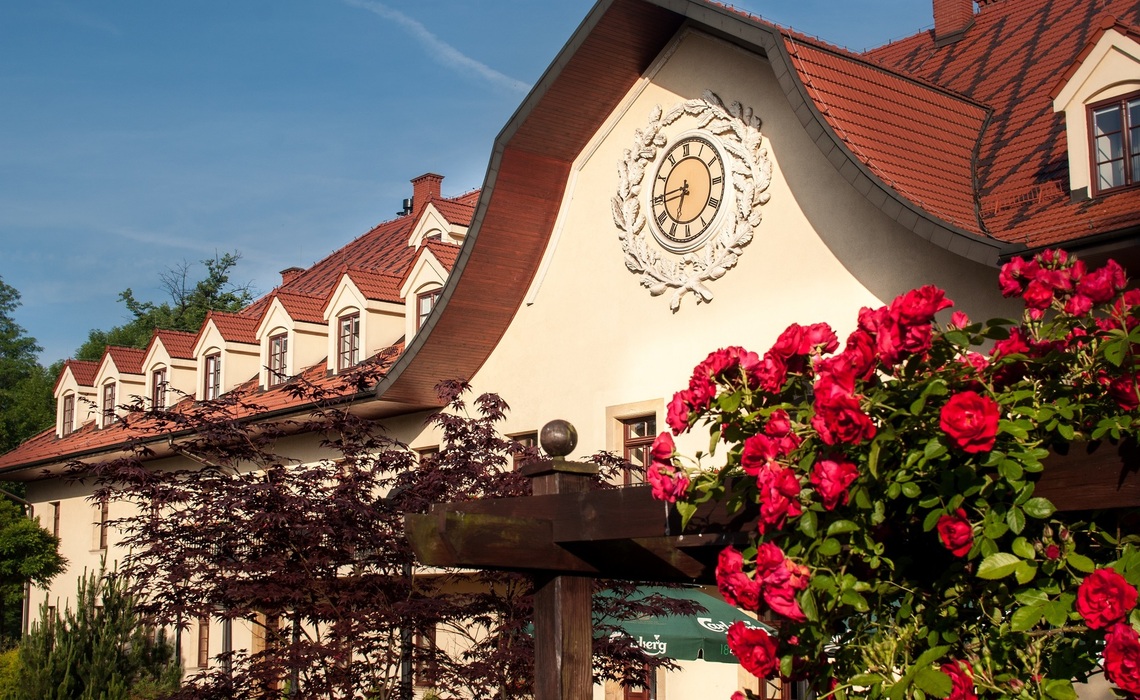
Today, Turówka Hotel & SPA**** is a restored, elegant hotel listed in the Polish register of historic monuments, where history meets modern comfort, and the exceptional past gives the stay an unparalleled atmosphere.
| 1812-1813 Construction of the saltworks in Wieliczka under the direction of the saltworks master Alojzy Hrdina, who arrived from Ebensee. Having been awarded the title of Imperial Commissioner, he moved to Wieliczka with his son, Jan Nepomucen Hrdina, then a young mining trainee. Jan N. Hrdina remained in Wieliczka, and the Hrdina family became closely associated with the town for many years, producing, among other things, excellent drawings of the Wieliczka underground workings. Efforts to build a new saltworks had begun much earlier, but it was not until 1810 that the Vienna Imperial Court Chamber announced by decree that Emperor Francis I had authorised the construction of a saltworks in Wieliczka. The building was erected on land belonging to the town, in the area of a medieval farm called “TUR”. Hence the name of the building, Turówka. | 1813-1815 Following the fall of the Duchy of Warsaw and Austria’s acquisition of all the Wieliczka salt mines, pursuant to the provisions of the Austro-Russian treaty of 3 May 1815, salt production did not commence in the building. Construction was halted, and soldiers were quartered in the main building, where military stables were also established. | |
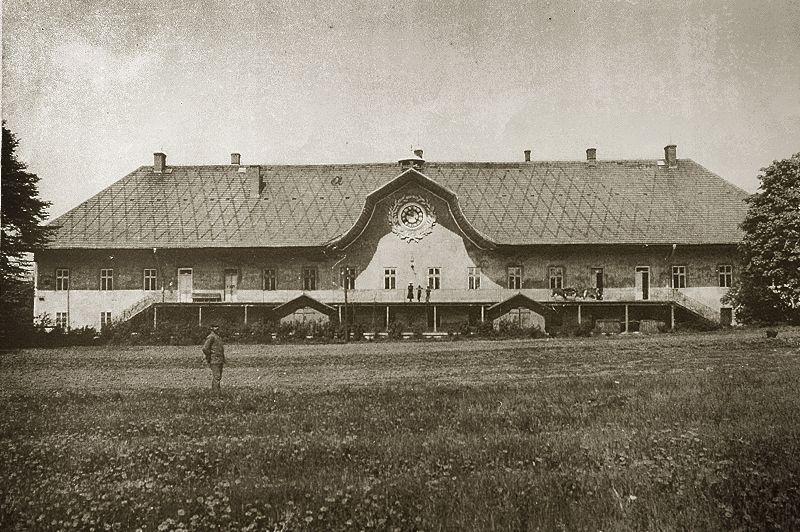
| 1817 Ultimately, the investment was abandoned. The salt pans, together with all the equipment collected, were dismantled and handed over to the Saltworks Administration in Lviv for use in the saltworks of Eastern Galicia. The main building was converted into a storage facility for grain, coal and building materials. | 1825 The Salt Sales and Dispatch Office was established in the saltworks building, along with accommodation for its employees (the administrator, controller, weighers and assistants). At first-floor level on the eastern side, a wooden porch on steel posts and brackets was built, providing access to the apartments. The saltworks building consisted of 5 office rooms, 7 storage rooms, and two- and four-room apartments. | |
| After 1857 After the railway line to Wieliczka was built, a railway siding was brought to the building, ending in a rotating switch. This made it possible to position a wagon directly by the warehouse doors on the western side. | 1825-1908 Throughout this period, the use of the outbuildings accompanying the main building on its southern and western sides was changed, and the buildings were remodelled. Initially, for example, there were three warehouses nearby, two of them with wooden arcades. Later, a fourth outbuilding was constructed between the main and southern buildings; it was subsequently demolished and replaced by a very large wooden warehouse for livestock salt. In 1901, the southern outbuilding was converted into apartments, and after 1908 the same was done with the western outbuilding. These two buildings have survived to the present day. | |
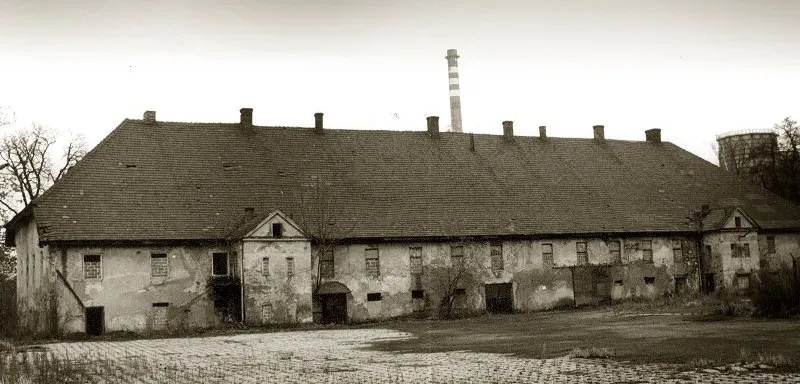
| 1918-1990 The entire floor of the former saltworks building was allocated as accommodation for employees of the Wieliczka salt mines. The ground floor and the hall on the western side housed saltworks warehouses belonging to the “Samopomoc Chłopska” Cooperative in Wieliczka. | 1988-1990 A project was drawn up to remodel and adapt the main building into a staff hotel for crews carrying out mine safety and security works. The then Provincial Office in Krakow transferred 10 apartments and rehoused all the tenants, but the Salt Mine did not undertake any work. Within ten years, the abandoned “Turówka” had become a complete ruin. | |
| 2001-2006 Construction work, reconstruction of the historic saltworks, adaptation into a hotel. | 11.12.2006 Opening of Turówka Hotel & SPA **** | |
| 8.06 - 1.07.2012 Turówka Hotel & SPA ⋆⋆⋆⋆ served as the official accommodation base for the Italian national team during EURO 2012. | 12.06 - 01.07.2017 Turówka Hotel & SPA ⋆⋆⋆⋆ served as the official accommodation base for the German U21 national team during EURO 2017. |